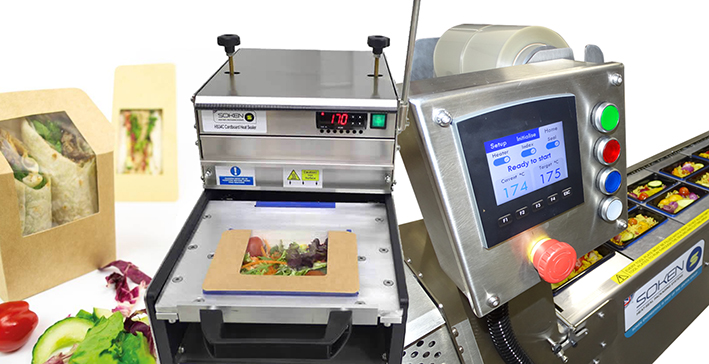
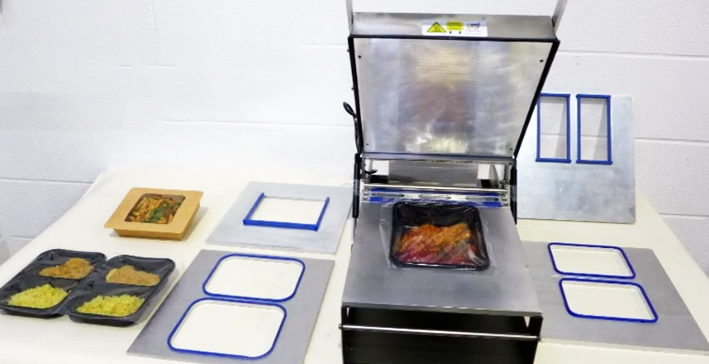
As people’s lives become busier than ever, convenience is often top of the priority list for consumers, especially when it comes to food. Whether it’s a ready-to-eat meal, a grab-and-go snack, or a microwaveable dinner, consumers expect their food to be safe, fresh, and easy to use. At the heart of this convenience lies heat sealable packaging—a solution that not only preserves food but also ensures hygiene, tamper evidence, and extended shelf life.
Soken Heat sealing machines are expertly built and fantastically versatile, allowing them to seal a wide range of different packaging types. We have detailed below the different types available:
Traditional plastic Tray Sealing (Lidding Film + Tray)
This system involves sealing a plastic formed tray with a heat-sealable lidding film to create and air and liquid-tight seal.
Common Uses:
- Ready-to-eat meals
- Fresh produce or salad kits
- Raw meat, poultry, and seafood
- Can also be used for non-food applications such as medical and consumer products.
Materials:
Trays: CPET, PP typically.
Lidding Films: PET, PE, or multilayer films with anti-fog and peelable properties.
Note: it is important that the tray material and lidding material are matched correctly to ensure a reliable and consistent seal. Ask Soken for advice.
Advantages:
- Tamper-evidence
- Suitable for MAP (Modified Atmosphere Packaging)
- Microwavable or oven-safe options
- Clear visibility for product display
Soken Machines that can seal this packaging include: HS20FC, HS25FC, HS34CF, HS36ACF, HS55F
Alternative material Tray Sealing (lidding film + Tray)
Similar to above, this system involves sealing a heat-sealable lidding film to a tray made from non-plastic materials, which are typically more eco-friendly. Materials such as bagasse (crushed sugarcane), cardboard, paper and other recyclable/biodegradable options are available. These types of trays are typically coated with a very thin layer of plastic sealing material (such as PE or PP) that provides the sealing surface but feature far less plastic overall than traditional CPET or PP trays.
Common Uses:
- Ready-to-eat meals
- Fresh produce or salad kits
- Raw meat, poultry, and seafood
- Convenience or on-the-go foods
Materials:
Trays: Bagasse, cardboard, paper typically.
Lidding Films: PET, PE, or multilayer films with anti-fog and peelable properties.
Advantages:
- More eco-friendly than traditional plastic trays – biodegradable and in some cases recyclable
- Tamper-evidence
- Suitable for MAP (Modified Atmosphere Packaging) in some cases
- Microwavable or oven-safe options
- Clear visibility for product display
Soken Machines that can seal this packaging include: HS20FC, HS25FC, HS34CF, HS36ACF, HS55F
Heat-sealable board packaging
This type of packaging is predominantly constructed from fibre board (such as cardboard or paper) with a thin lining of heat-sealable plastic applied to the inside faces to allow the packaging to seal to itself when heat and pressure are applied. The lining also acts as a barrier to protect the board substrate from moisture ingress.
This is typically a homogenous type of packaging, often supplied in a flatpack from. The packaging seals to itself to enclose the product, with no additional films or substrates required.
Common Uses:
- Ready-made sandwiches, wraps and baguettes
- Ready-to-eat meals
- Fresh produce or salad kits
- Convenience or on-the-go foods
Materials:
Cardboard, paper with either PE or PP lining. Some packs are available with a plastic-free lining material and can be fully recycled.
Advantages:
- Reduced plastic content compared to full plastic trays/packs
- Tamper-evidence
- Increases shelf life compared to clip together or clamshell packs
- Looks more professional – outer packaging available in many different colours and can be printed with bespoke logos, text, patterns etc.
- No additional films or ancillaries needed to seal
Soken Machines that can seal this packaging include: HS22C, HS34C, HS35AC, HS35EC, HS52C, HS55
Other types of Heat Seal packaging
As well as the main packaging types described above, there are other less common types of heat-sealable packaging available that can be used in our Soken Heat Seal machines. Used in industries other than food production, these packs can be sealed reliably on many of our Soken Machines.
Other Packaging Types:
- Plastic Trays with Tyvek Lidding – predominantly used in the pharma and medical sectors, the Tyvek lidding material is a woven substrate with a paper-like feel. It can be easily printed on and offers a waterproof, yet breathable seal.
- Traditional Blister Packaging – Often used for consumer products, traditional blister packaging consists of a plastic ‘tray’ typically formed in the shape of the product it is enclosing, with either a plastic or cardboard backing panel. The backing panel features a heat-sealable lining that adheres to the mating plastic front when heat and pressure is applied.
- Cardboard Blister Packaging – a relatively new entrant to the heat seal market is full cardboard blister packaging. Working much the same as traditional blister packs but featuring a folded cardboard ‘tray’ to encapsulate the product and sealed to a full card backing board.
- Bags and pouches – predominantly plastic construction, but recently some hybrid substrate materials are starting to emerge. These are pre-formed bags or pouches with one-side open. The product is placed into the bag or pouch and then the opening is heat sealed. While this type of packaging is not suitable for our range of Soken Heat sealers, The Jenton Group offers a vast range of linear heat sealers for use on many different types of bag and pouches.
Choosing the Right Heat Sealable Packaging
Selecting the right packaging depends on several key factors:
- Product type: Solid, liquid, or powder? Raw, cooked, fresh?
- Shelf-life requirements: Is barrier protection needed?
- Storage conditions: Refrigerated, frozen, or shelf-stable?
- Consumer use case: Will the product be microwaved or cooked in the oven?
Ultimately, convenience food brands must balance functionality, safety, sustainability, and consumer appeal when choosing packaging solutions.
Final Thoughts
Heat sealable packaging has revolutionized the convenience food industry, offering flexible, efficient, and consumer-friendly solutions. As packaging materials and sealing technologies continue to evolve, we can expect even more innovative formats tailored to our on-the-go lifestyles and growing environmental consciousness. The good news is that our range of Soken Heat Sealing machines will continue to offer fast, reliable and consistent sealing for a wide range of heat sealable packaging.
Looking for sustainable heat sealable options or custom packaging solutions? Feel free to reach out and contact us —we’re always ready to help navigate the future of food packaging.